Faced with the growing urgency to limit global warming within the boundaries set by the Paris Agreement, the scientific community and financial markets have realized that simply reducing industrial emissions is no longer sufficient. To achieve climate neutrality by 2050, it is imperative to develop and deploy Carbon Dioxide Removal (CDR) technologies at industrial scale capable of actively extracting carbon dioxide already present in the atmosphere and storing it in a stable, permanent manner.
Among the various CDR solutions that have emerged in recent years — ranging from geological carbon capture (DACCS) to accelerated rock weathering — biochar (biomass-derived charcoal for agricultural use) stands out as the only technology that is immediately scalable, economically viable, and characterized by a multitude of systemic co-benefits for both industry and agriculture.
In this introductory guide, we will examine the scientific foundations of biochar, the thermochemical processes behind its production, carbon permanence metrics, and its central role in the emerging high-integrity carbon credit market.
1. What Is Biochar: From Amazonian Origins to Advanced Pyrolysis
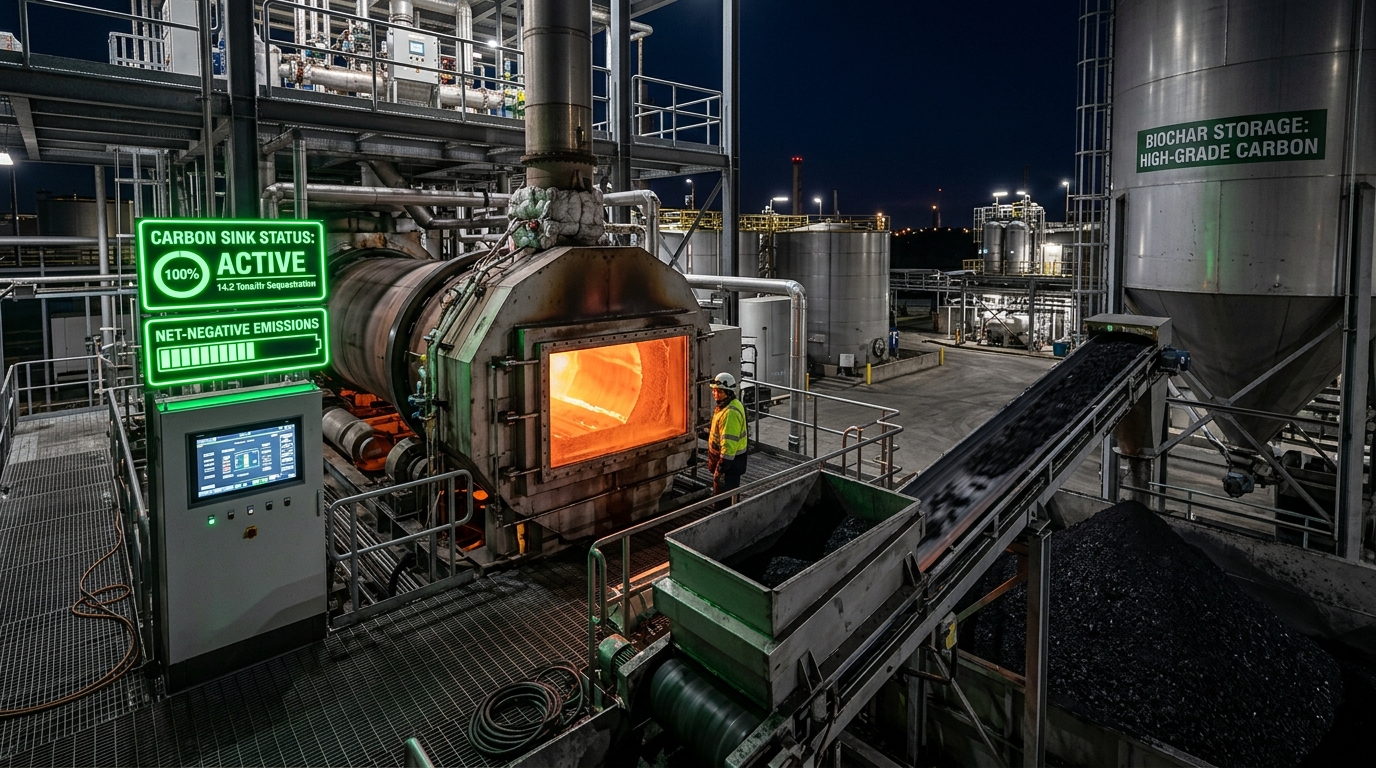
Biochar is a solid, porous, highly carbonaceous material produced through the thermochemical processing of residual biomass in an oxygen-deprived or strictly oxygen-limited atmosphere.
While modern production technology utilizes digitally controlled industrial reactors, biochar’s origins trace back thousands of years. Indigenous populations of the Amazon Basin (between 450 BCE and 950 CE) created the famous Terra Preta do Índio: fertile black soil plots formed by incorporating incompletely combusted charcoal, agro-food waste, and bones into typically poor, highly leached tropical soils. Centuries later, these soils still retain exceptional levels of organic matter and fertility, demonstrating the remarkable permanence of carbon sequestered in this form.
[Woody Biomass / Agricultural Residues]
          │
          ▼  (High-Temperature Pyrolysis: 450°C - 750°C in the Absence of O₂)
   ┌──────┴────────────────────────┬────────────────────────┐
   ▼                               ▼                        ▼
[Solid Biochar]             [Uncondensable Syngas]  [Liquid Bio-oil]
(Organic C Fixation)        (Thermal/Electrical E.) (Bio-Refinery)
The Natural Carbon Cycle vs. Biochar Carbon Fixation
In the natural biological carbon cycle, plants absorb carbon dioxide from the atmosphere through photosynthesis. However, when vegetation dies or agricultural residues decompose on the ground (or are burned in open fields), organic matter is rapidly oxidized by microbial decomposers. Result: over 95–99% of captured carbon returns to the atmosphere as CO₂ or methane (CH₄) within a few years.
Pyrolysis abruptly interrupts this natural degradation chain:
- Residual biomass (prunings, nut shells, waste woodchips, dried digestate) is fed into a sealed reactor.
- In the absence of an oxidizing agent (oxygen), the biomass does not burn; instead, it undergoes heat-driven molecular cleavage (between 450°C and 800°C).
- Volatile compounds (hydrogen, oxygen, and gaseous fractions) separate to form syngas and bio-oil, suitable for green thermal or electrical energy generation.
- Residual carbon rearranges into condensed aromatic rings that are extremely stable and recalcitrant to microbial degradation: biochar.
2. Chemistry of Permanence: Why Biochar Stores CO₂ for Centuries
The fundamental metric in the Carbon Removal market is permanence — the assurance that sequestered carbon dioxide will not be re-released into the atmosphere during the accounting timeframe.
At the molecular level, raw plant matter consists primarily of cellulose, hemicellulose, and lignin — polymer chains easily targeted by saprophytic bacterial and fungal enzymes.
During pyrolysis, thermal energy breaks weak C–H and C–O bonds, promoting the formation of graphite-like structures composed of condensed polycyclic aromatic benzene rings (aromatic PAH).
Lignin/Cellulose Structure (Labile) ──(Pyrolysis > 500°C)──> Polycyclic Aromatic Lattice (Recalcitrant Biochar)The H/Corg Ratio Scale and IPCC Standards
The Intergovernmental Panel on Climate Change (IPCC) and major international certification bodies (such as the European Biochar Certificate - EBC and Puro.earth) quantify biochar stability based on the molar ratio of hydrogen to organic carbon (H/Corg):
- H/Corg > 0.7: Biochar contains a high percentage of unstable carbon; unsuitable for long-term carbon removal.
- H/Corg between 0.4 and 0.7: Guarantees a minimum 50–70% permanence beyond 100 years.
- H/Corg < 0.4 (Produced at T > 550°C): Graphitic lattice is virtually impervious to atmospheric and biological degradation. Guarantees permanence exceeding 90–95% for over 1,000 years in soil.
| Technical Parameter | Raw Biomass | Low-Temp Biochar (400°C) | High-Temp Biochar (700°C) |
|---|---|---|---|
| Organic C Content | ~45 - 50% | ~60 - 70% | ~80 - 92% |
| H/Corg Molar Ratio | > 1.4 | 0.5 - 0.6 | < 0.25 |
| Specific Surface Area (BET) | < 5 m²/g | 50 - 150 m²/g | 300 - 600 m²/g |
| Estimated Soil Half-life | 1 - 5 years | 100 - 300 years | > 1,000 years |
Every metric ton of high-purity biochar permanently sequestered equals approximately 2.5 to 3.0 metric tons of net CO₂ equivalent removed from the atmosphere, deducting process and transportation emissions measured across the full Life Cycle Assessment (LCA).
3. Agronomic and Systemic Benefits: A Multi-Functional Matrix
Unlike Direct Air Capture (DAC) technologies — which require massive electrical inputs and underground storage reservoirs without generating direct localized co-benefits — biochar applied to agricultural soils acts as a powerful structural soil amendment and regenerative agent.
A. Molecular Porosity and Water Retention
A single gram of high-grade biochar possesses an internal specific surface area exceeding 400 square meters, inherited from the parent plant’s vascular architecture. When incorporated into soil:
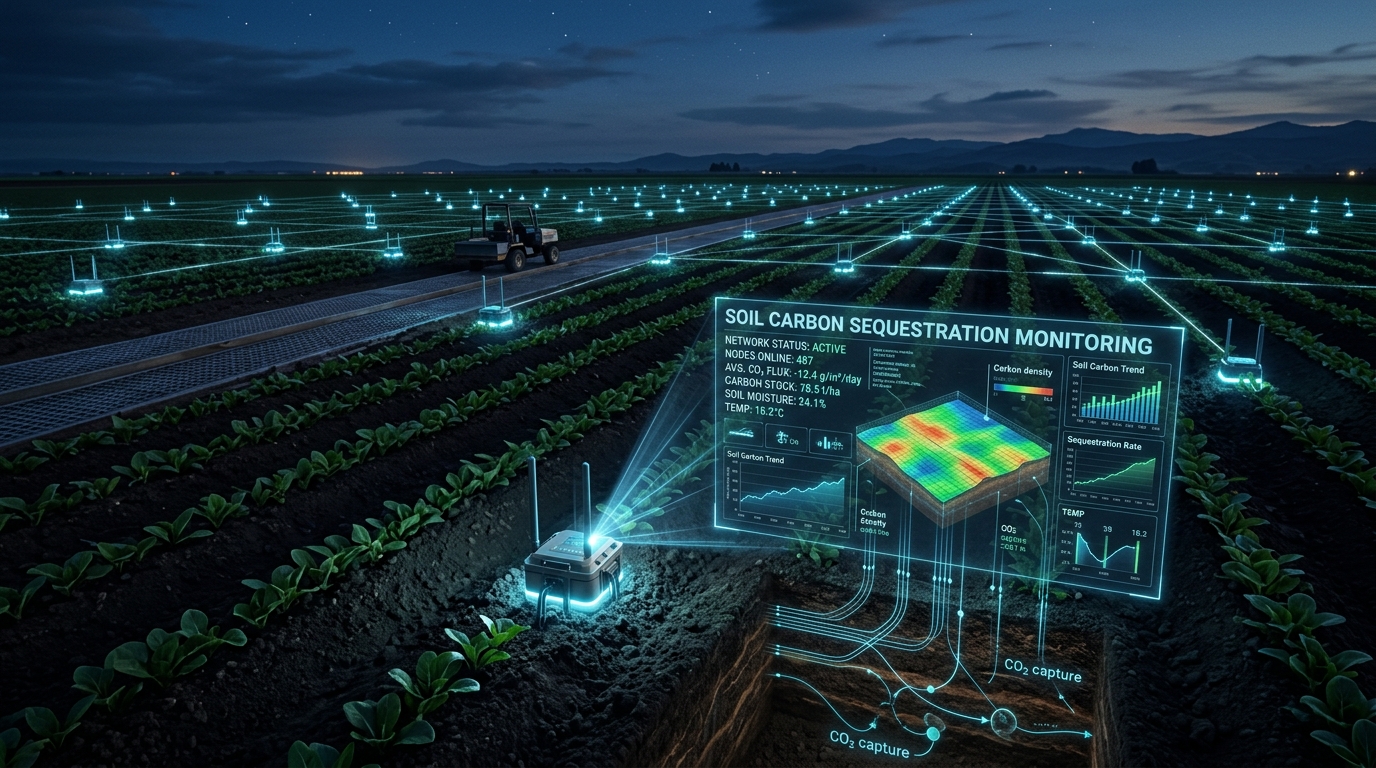
- It acts like a microscopic sponge, retaining up to 20–30% more rainwater and reducing irrigation requirements during extended dry periods.
- It prevents surface runoff and erosion in degraded soils.
B. Cation Exchange Capacity (CEC) and Plant Nutrition
Through natural soil weathering (aging), negatively charged carboxyl and phenolic functional groups develop on the biochar surface. This endows biochar with high Cation Exchange Capacity (CEC):
- Essential plant nutrient cations (Ca²⁺, Mg²⁺, K⁺, NH₄⁺) are adsorbed on surfaces rather than leached by heavy rainfall into deep groundwater tables.
- Synthetic nitrogen and phosphate fertilizer applications can be reduced, eliminating indirect nitrous oxide (N₂O) emissions — a greenhouse gas with 273 times the global warming potential of CO₂.
C. Soil Microbiome Stimulation
Biochar’s porous cavities provide safe refuge from microbial predators for rhizosphere bacteria and symbiotic mycorrhizal fungi. Biochar becomes a biological habitat that accelerates soil regeneration depleted by decades of intensive monoculture.
4. The Carbon Credits (CDR) Economy: Monetizing Sequestration
From an industrial investment and financial engineering perspective, biochar represents the leading sector in the voluntary Carbon Dioxide Removal (CDR) credit market.
While traditional “avoidance” credits (such as avoided deforestation or wind farm projects) face scrutiny over additionality and greenwashing risks, credits generated from biochar facilities command a premium market position.
[Industrial Pyrolysis Facility]
       │
       ├─► Thermal Energy / District Heating Sales ───► Direct Revenue Stream 1
       ├─► Certified Biochar Sales (EBC/FDA) ──────────► Direct Revenue Stream 2
       └─► CORC Issuance (Puro.earth / Verra) ─────────► Carbon Credit Revenue (CDR)
Certification Methodologies and Financially Bankable Returns
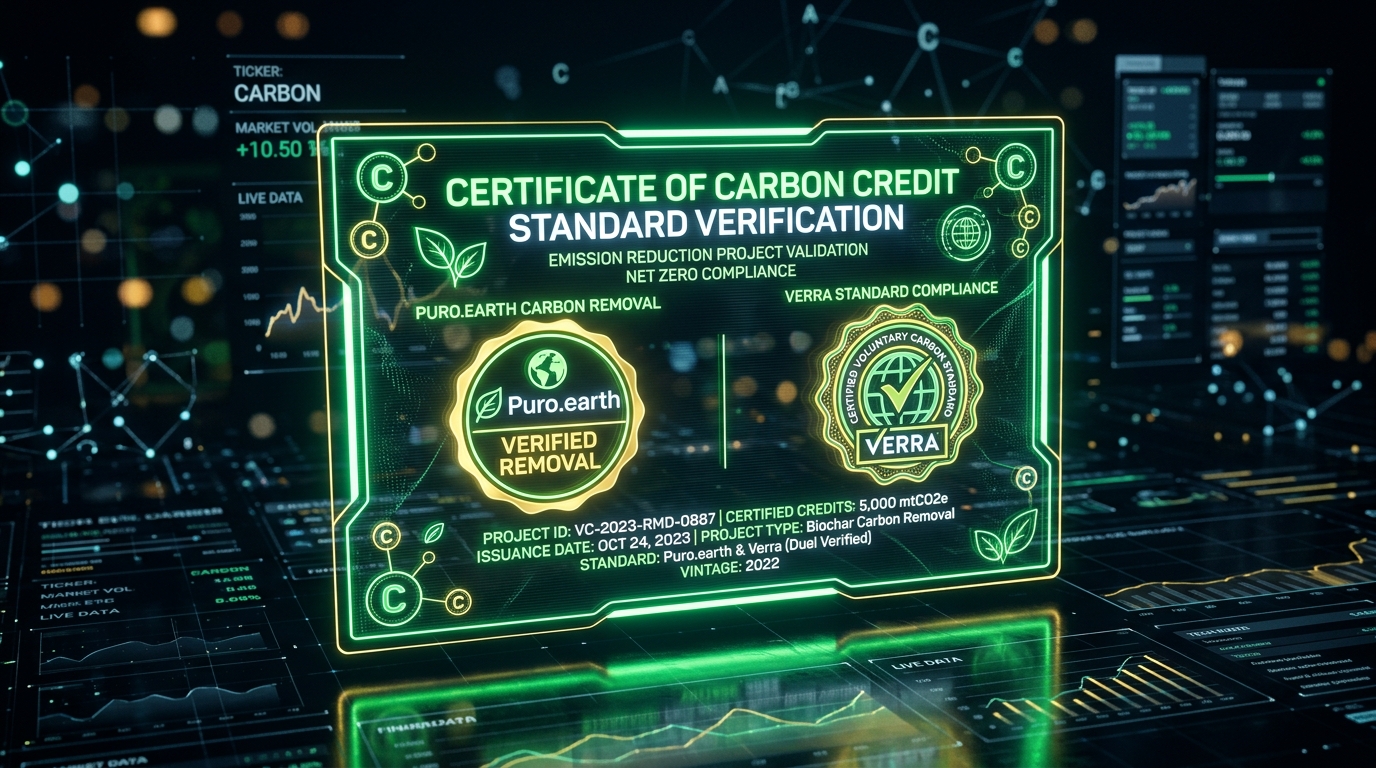
Leading platforms such as Puro.earth (majority-owned by Nasdaq) have established rigorous protocols (such as CO₂ Removal Certificates or CORCs) to quantify and validate biochar removal:
- Demonstrated Additionality: The plant exists and yields impact primarily due to the underlying carbon monetization model.
- Comprehensive LCA Monitoring: Biomass transportation, drying energy inputs, and theoretically labile carbon fractions are fully deducted.
- Traceability of Application Sites: Credits are issued and bankable only when biochar is irreversibly applied in soil, building materials, or permanent industrial compounds.
Currently, biochar-based removal credits trade on voluntary markets at €110 to €180 per metric ton of CO₂e, providing steady cash flows and high operating margins for operators of modern pyrolysis plants.
5. The Mantohn SA Perspective: Scaling Biochar’s Industrial Transition
As an investment holding company focused on disruptive technologies for ecological and industrial transition, Mantohn SA identifies biochar as the ideal bridge connecting agro-forestry waste valorization, food security, and high-integrity climate finance.
However, scaling the sector requires moving beyond small agricultural pilot plants toward integrated, high-thermal-efficiency industrial hubs equipped with:
- Advanced process automation and IoT sensing for real-time H/Corg ratio optimization.
- Circular economy integration using waste heat for municipal district heating networks or industrial drying operations.
- Digital registry tracking systems to guarantee an unalterable chain of custody for stored carbon.
Biochar is not a distant theoretical promise, but a market-ready industrial solution poised to lead Carbon Removal for decades to come. Investing in biochar infrastructure, technologies, and ecosystems aligns long-term financial profitability with meaningful regeneration of global natural capital.