The Voluntary Carbon Market (VCM) has evolved far beyond the era of ambiguous methodologies and sporadic empirical sampling. Driven by the combined momentum of the ICVCM (Integrity Council for the Voluntary Carbon Market), the European Union’s CRCF (Carbon Removal Certification Framework), and the imperative for corporate balance sheets to report Net Zero commitments aligned with the Science Based Targets initiative (SBTi), carbon credits have split into two distinct macro-categories: emission reduction/avoidance credits (Avoidance/Reduction) and durable atmospheric removal credits (Carbon Dioxide Removal - CDR).
For an industrial project developer, an institutional investor, or a family office engaged in the green transition, selecting the appropriate carbon certification standard represents the most critical architectural decision. Choosing between Puro.earth, Verra (Verified Carbon Standard - VCS), and Gold Standard (GS4GG) is not merely a matter of selecting a registry or compliance label; it dictates the underlying asset class, the project’s financial profile (CapEx/OpEx, monetization timeline), the target buyer profile (Big Tech off-takers vs. corporate compliance buyers), and the bankability of generated cash flows.
In this comprehensive technical guide, we analyze the infrastructure, methodologies, cost structures, and audit processes of the world’s three leading standards, with a specific focus on engineered carbon removal technologies such as biochar, providing decision-makers with a strategic roadmap for standard selection.
1. The Fundamental Dichotomy: Avoidance vs. Removal (CDR) and the Permanence Criterion
The primary discriminating variable when evaluating certification standards is the core distinction between Avoidance (preventing future greenhouse gas emissions) and Carbon Dioxide Removal (CDR) (actively extracting CO2 from the atmosphere and sequestering it long-term).
┌─────────────────────────────────────────────────────────────────────────────────┐
│                           CARBON CREDIT TAXONOMY                                │
└─────────────────────────────────────────────────────────────────────────────────┘
                                         │
                    ┌────────────────────┴────────────────────┐
                    ▼                                         ▼
         AVOIDANCE / REDUCTION                     CARBON DIOXIDE REMOVAL (CDR)
  (Energy Efficiency, REDD+, RES)                (Biochar, DACCS, ERW, Biomass)
                    │                                         │
        ┌───────────┴───────────┐                 ┌───────────┴───────────┐
        ▼                       ▼                 ▼                       ▼
   Short-term              Medium-Long        Medium Permanence      High Permanence
  (< 30 years)            (30-100 years)      (100-500 years)        (1000+ years)
  Reversal Risk           Buffer Risk         Chemical Stability     Geoclimatic Lock
1.1 The Oxford Principles for Net Zero
According to the Oxford Principles for Net Zero Aligned Carbon Offsetting, compensating for residual emissions requires an inevitable, progressive shift away from avoidance offsets toward high-permanence carbon removal credits.
- Avoidance: Traditional methodologies (e.g., renewable energy expansion, industrial energy efficiency, REDD+ avoided deforestation). While environmentally valuable for global mitigation, avoidance credits do not reduce the absolute concentration of CO2 already accumulated in the atmosphere.
- CDR (Carbon Dioxide Removal): Biological, chemical, or industrial processes that actively remove ambient CO2 and lock it away durably in geological formations, terrestrial sinks, or engineered materials (e.g., biochar embedded in concrete, DACCS, mineralisation).
1.2 The Permanence Horizon
Not all CDR credits are created equal. The concept of durability defines the timeframe (measured in centuries or millennia) over which sequestered carbon remains isolated from the active carbon cycle without risk of release (reversal):
- Biological / Nature-Based Permanence (< 100 years): Afforestation, reforestation, soil organic carbon enhancement. Characterized by elevated reversal risk driven by wildfires, pest infestations, thermal stress, or land-use changes.
- Engineered / Durable Permanence (100 to 1,000+ years): Biochar (with atomic ratio $H/C_{org} < 0.7$), biomass gasification with carbon capture, Enhanced Rock Weathering (ERW), Direct Air Carbon Capture and Storage (DACCS). Reversal risk is practically negligible due to the thermodynamic stability of the fixed carbon matrix.
2. Strategic Overview of the Three Dominant Standards
The three leading certification bodies serve distinctly different market segments, technical scopes, and impact philosophies.
┌──────────────────────────────────────────────────────────────────────────────────┐
│                      GLOBAL MARKET POSITIONING OVERVIEW                          │
├───────────────────┬─────────────────────────────┬────────────────────────────────┤
│ Standard          │ Primary Focus               │ Market Model                   │
├───────────────────┼─────────────────────────────┼────────────────────────────────┤
│ Puro.earth        │ Tech CDR / Engineered       │ High-Durable Removal (CORC)    │
│ Verra (VCS)       │ High Volume / Multi-Sector  │ Avoidance & Nature/Engineered  │
│ Gold Standard     │ SDG Co-Benefits / NGO       │ High-Integrity & Co-Benefits   │
└───────────────────┴─────────────────────────────┴────────────────────────────────┘
2.1 Puro.earth: The Engineered Carbon Removal Specialist
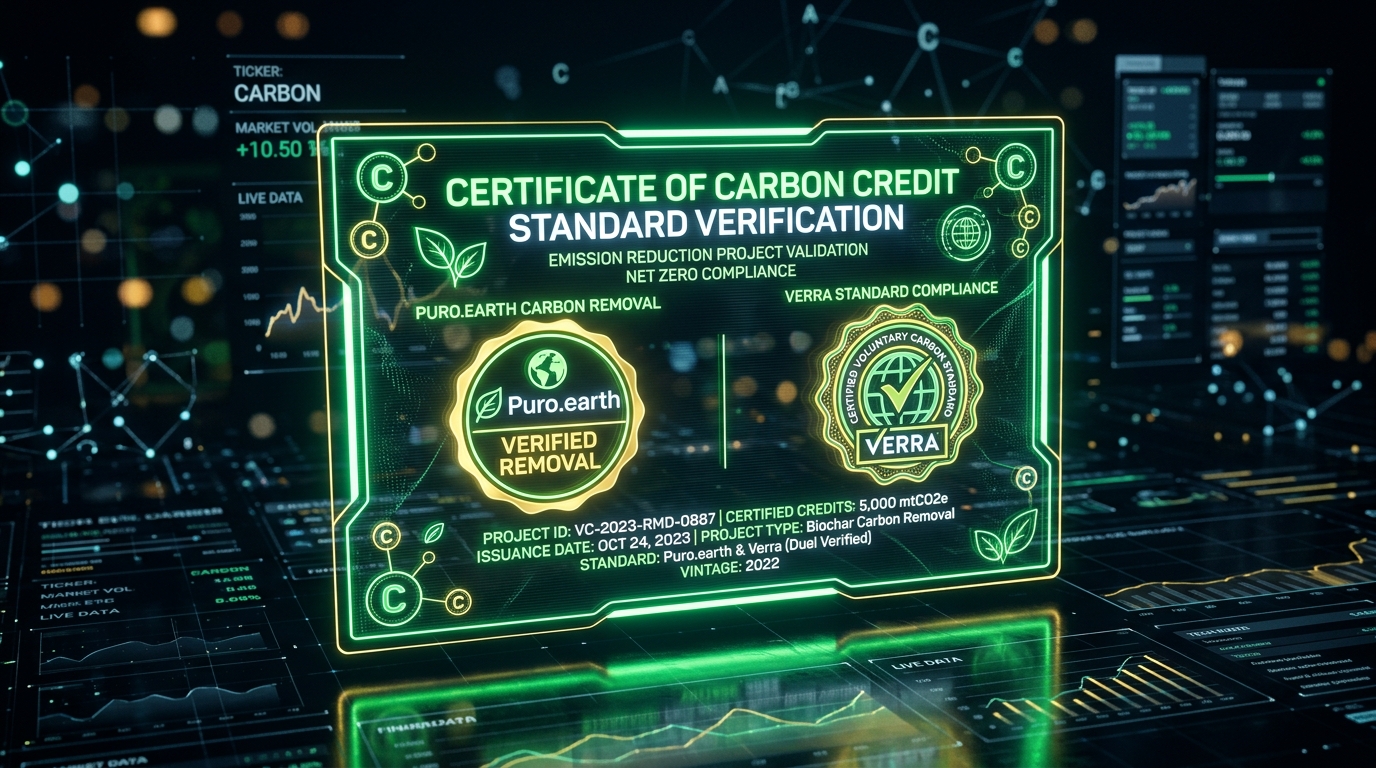
Founded in Finland and majority-acquired by Nasdaq in 2021, Puro.earth is the world’s first B2B marketplace and standard dedicated exclusively to high-durability carbon removal (100+ years).
- Credit Unit: CORC (CO2 Removal Certificate). Each CORC represents 1 metric tonne of net atmospheric CO2 removed and sequestered for at least one century.
- Methodological Scope: Puro.earth explicitly excludes avoidance and traditional renewable energy projects. Eligible methodologies include Biochar, Carbonated Building Materials, Geocement, Biomass Energy with Carbon Capture and Storage (BECCS), and Enhanced Rock Weathering (ERW).
- Distinctive Features: High bankability among tech off-takers (Microsoft, Stripe, Shopify), native digital traceability, and rigorous Life Cycle Assessment (LCA) requirements covering the entire supply chain.
2.2 Verra (Verified Carbon Standard - VCS): The Volume Titan
Verra is the Washington D.C.-based non-profit organization that manages the Verified Carbon Standard (VCS), the world’s largest voluntary carbon credit program by issued volume (exceeding 1 billion VCUs to date).
- Credit Unit: VCU (Verified Carbon Unit).
- Methodological Scope: Universal multi-sector coverage. Verra spans forest conservation (REDD+), agricultural land management, waste-to-energy, clean transportation, and durable engineered CDR technologies.
- Distinctive Features: Unmatched global market liquidity and broad buyer recognition. To address historic scrutiny regarding forest baseline estimates, Verra introduced major updates (VCS Version 4, updated REDD+ modules, and the dedicated VM0044 Biochar Methodology).
2.3 Gold Standard (GS4GG): The Gold Standard for Social & SDG Co-Benefits
Established in 2003 by WWF and other international NGOs, Gold Standard for the Global Goals (GS4GG) is synonymous with rigorous environmental integrity and community co-benefits.
- Unità di Misura: GSVER (Gold Standard Verified Emission Reduction).
- Methodological Scope: Focused on projects delivering direct, quantifiable positive impacts on local communities aligned with the UN Sustainable Development Goals (UN SDGs). Projects must demonstrate contributions to at least 3 SDGs alongside Goal 13 (Climate Action).
- Distinctive Features: Highest reputational premium against greenwashing risk. Highly sought after for clean water access, efficient cookstoves, community-led reforestation, and social agriculture biochar projects.
3. Methodological Focus: Biochar Certification
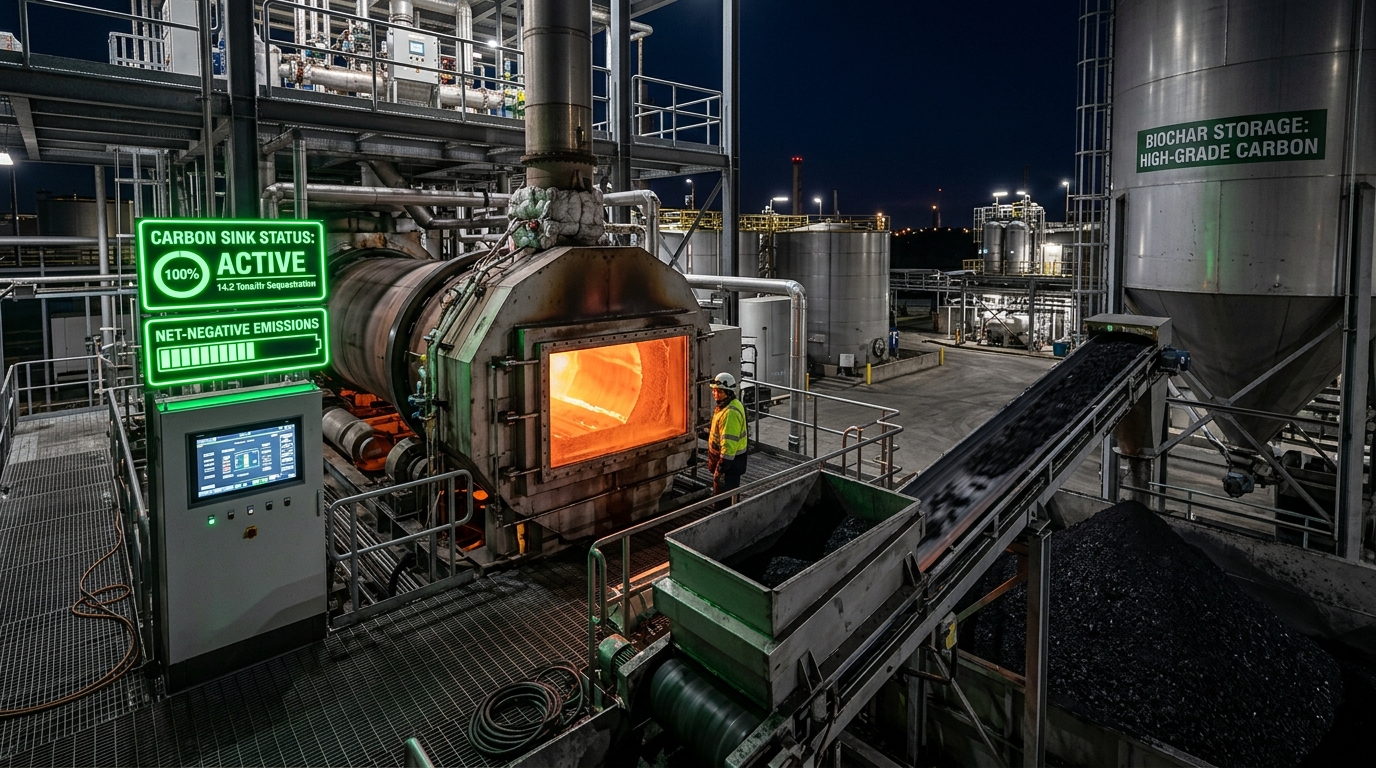
Biochar (pyrogenic carbon produced via thermal conversion of waste biomass in oxygen-limited environments) serves as the ideal bridge between manageable CapEx industrial scalability and long-term carbon permanence. Each standard approaches biochar certification with distinct methodological parameters.
┌──────────────────────────────────────────────────────────────────────────────────┐
│                   BIOCHAR METHODOLOGIES: COMPARATIVE SUMMARY                     │
├──────────────────────────┬───────────────────────┬───────────────────────────────┤
│ Parameter                │ Puro.earth (CORC)     │ Verra (VM0044)                │
├──────────────────────────┼───────────────────────┼───────────────────────────────┤
│ Reference Methodology    │ Puro Biochar Standard │ VM0044 v1.1                   │
│ Minimum Permanence       │ 100 years (via H/Corg)│ 100 - 1000 yrs (Buffer Pool)  │
│ Max $H/C_{org}$ Ratio    │ < 0.7 (Mandatory)     │ < 0.7 for 100y+ permanence    │
│ End-Use Tracking         │ Mandatory (dMRV)      │ Required with decay deduction │
│ Biomass Eligibility      │ 100% Non-food waste   │ Forestry & Agri residues      │
└──────────────────────────┴───────────────────────┴───────────────────────────────┘
3.1 Feedstock Sustainability Criteria
All three standards enforce strict prohibitions against using primary forest biomass or feedstocks competing with human food production.
- Puro.earth: Exclusively accepts wood processing waste (sawmills, offcuts), secondary agricultural residues (nut shells, pruning chips), or treated municipal sewage sludge (under the specific Sewage Sludge Biochar methodology). Biomass must be certified via FSC/PEFC or verified zero-value waste streams.
- Verra (VM0044): Conducts strict additionality assessments on feedstock supply. Developers must prove that the biomass lacked alternative high-value economic uses and would otherwise decay or be openly burned, releasing CH4 and CO2.
- Gold Standard: Mandates formal local stakeholder consultations to ensure biomass collection does not deprive local populations of essential fuel or soil nutrients.
3.2 Atomic $H/C_{org}$ Ratio and Carbon Matrix Stability
The primary chemical key for determining biochar durability in soil or industrial matrices is the Hydrogen to Organic Carbon atomic ratio ($H/C_{org}$).
- An $H/C_{org} < 0.4$ indicates a fused aromatic ring structure with estimated soil stability exceeding 1,000 years.
- An $0.4 < H/C_{org} < 0.7$ guarantees a certified permanence of 100 to 500 years.
- An $H/C_{org} > 0.7$ disqualifies the material from high-permanence CDR status, leading to severe credit discounting or rejection.
3.3 End-Use Accounting & Sequestration Verification
Carbon removal credits are issued only once biochar reaches its verifiable end-use destination:
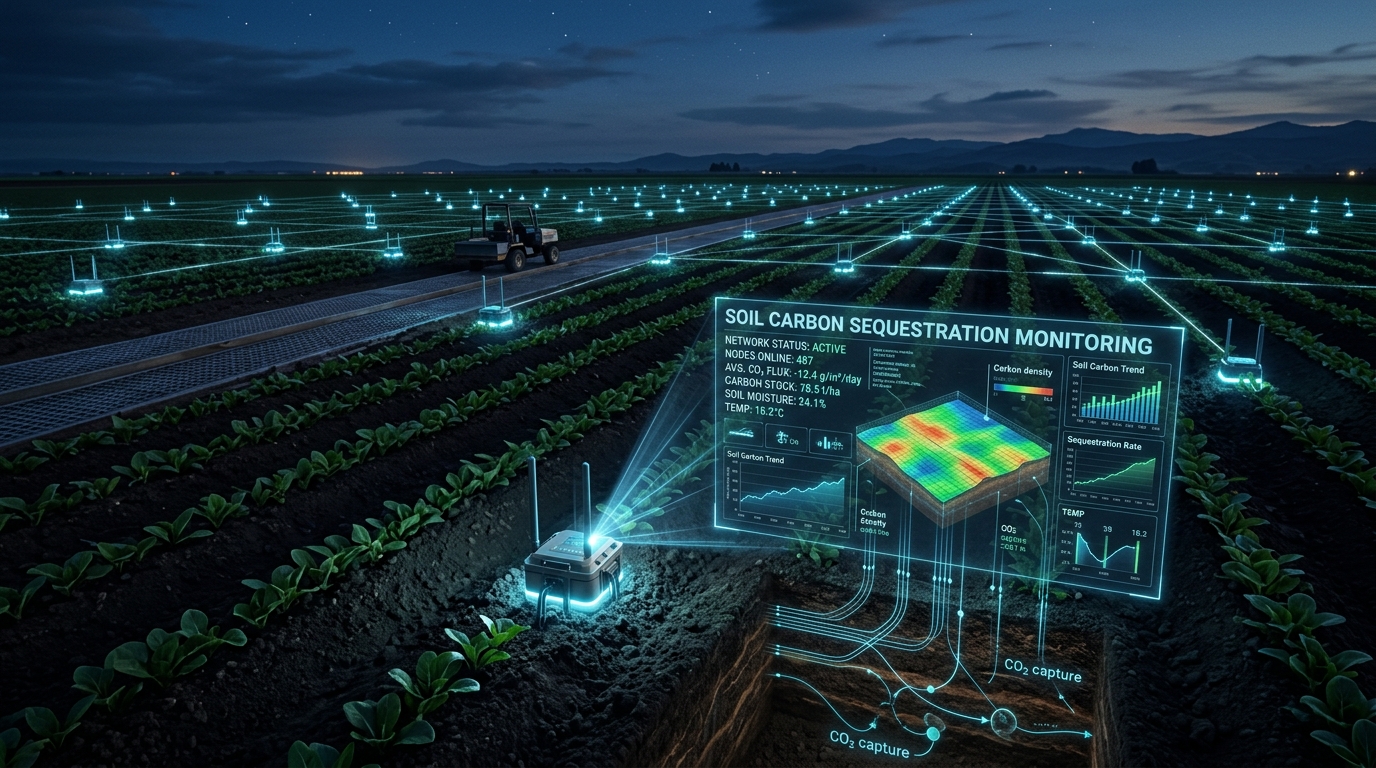
- Soil / Agricultural Application: Credits are issued accounting for modeled 100-year decay rates based on soil temperature and pH dynamics.
- Construction Materials (Concrete, Asphalt, Insulation): Complete physical entrapment with zero biological degradation. This end-use receives maximum net yield credit ($1.0 \text{ tCO2e} / \text{tCO2e sequestered}$).
4. Audit Process, VVBs, dMRV, and Cost Breakdown
Converting raw biomass into bankable carbon credits requires navigating a rigorous validation and verification cycle executed by accredited third-party auditors (VVBs - Validation and Verification Bodies).
┌─────────────────────────────────────────────────────────────────────────────────┐
│                         CERTIFICATION LIFE CYCLE                                │
└─────────────────────────────────────────────────────────────────────────────────┘
                                         │
 1. FEASIBILITY & LCA  ──► Biomass analysis, energy balance, standard selection
                                         │
 2. PDD DEVELOPMENT    ──► Project Design Document drafting & baseline setting
                                         │
 3. VALIDATION (VVB)   ──► Document audit & physical site inspection by VVB
                                         │
 4. REGISTRATION       ──► Formal registration approval (Puro / Verra / GS)
                                         │
 5. OPERATION & dMRV   ──► Pyrolysis operations, IoT data capture, supply tracking
                                         │
 6. VERIFICATION (VVB) ──► Periodic audit of net sequestered volumes
                                         │
 7. ISSUANCE           ──► Credit delivery to registry account (CORC / VCU / GSVER)
4.1 Role of Validation and Verification Bodies (VVBs)
VVBs are independent auditing entities (such as TÜV SÜD, DNV, Earthood, Aster Global, KPMG) accredited to verify project claims. VVBs report directly to the registry standard, ensuring complete independence from the project owner.
4.2 The Rise of dMRV (digital Monitoring, Reporting, and Verification)
Traditional audit cycles relying on manual paper logbooks have been replaced by automated dMRV systems:
- IoT & Edge Computing: Sensors mounted directly on pyrolysis plants continuously stream core operating metrics (reactor temperature $> 550^\circ\text{C}$, residence time, power draw, syngas flaring).
- Smart Contracts & Distributed Ledgers: Each batch of biochar is bound to a cryptographic hash containing certified laboratory assays ($H/C_{org}$, PAH polycyclic aromatic hydrocarbons, heavy metals) and digital delivery receipts from end-users.
4.3 Comprehensive Financial & Operational Comparison Table
| Cost Item / Parameter | Puro.earth | Verra (VCS) | Gold Standard (GS4GG) |
|---|---|---|---|
| VVB Audit Fee (Estimated) | € 15,000 – € 35,000 | € 30,000 – € 70,000 | € 35,000 – € 80,000 |
| Registry Registration Fee | € 2,500 – € 5,000 | $ 5,000 – $ 10,000 | $ 3,500 – $ 7,500 |
| Issuance Fee (per Credit) | ~ € 0.60 – € 1.50 / CORC | $ 0.10 – $ 0.30 / VCU | $ 0.30 – $ 0.45 / GSVER |
| PDD to Issuance Timeline | 6 – 10 Months | 18 – 30 Months | 18 – 36 Months |
| Mandatory Buffer Pool | None (Stability guarantee) | Yes (10% - 20% pool withholding) | Yes (10% - 25% pool withholding) |
| Crediting Period Length | 5 years (Renewable) | 10 years (Renewable) | 5 years (Renewable up to 3x) |
5. Buyer Profiles and Market Price Premiums
Standard selection directly impacts the market clearing price obtained in over-the-counter (OTC) bilateral transactions or spot exchange trading.
┌──────────────────────────────────────────────────────────────────────────────────┐
│                   AVERAGE PRICING & TARGET BUYER PROFILES                        │
├───────────────┬──────────────────────┬───────────────────────────────────────────┤
│ Standard      │ Price Range (€/t)    │ Dominant Target Buyer                     │
├───────────────┼──────────────────────┼───────────────────────────────────────────┤
│ Puro.earth    │ € 110 – € 250+       │ Big Tech, Long-term Offtakers, Financials│
│ Verra (VM0044)│ € 60 – € 130         │ Heavy Industry, Aviation, Compliance      │
│ Gold Standard │ € 80 – € 160         │ Luxury Brands, Consumer Goods, Impact VCs │
└───────────────┴──────────────────────┴───────────────────────────────────────────┘
5.1 Big Tech & Demand for High-Durability CDR
Frontier buyers like Microsoft, Stripe, Alphabet, Shopify, and BCG have established corporate procurement coalitions (Advance Market Commitments) focused exclusively on durable carbon removal.
These buyers systematically decline avoidance offsets in favor of Puro.earth CORCs or Verra VM0044 biochar credits, demonstrating a willingness to pay premium prices ranging from € 130 to € 220+ per metric tonne of CO2 permanently sequestered, compared to $5 - $12/t for forestry avoidance credits.
5.2 Social Co-Benefits as Premium Value Drivers
Buyers in Luxury Goods, Fast-Moving Consumer Goods (FMCG), and corporate foundations overwhelmingly favor Gold Standard. In these sectors, demonstrating tangible progress on poverty alleviation (SDG 1), gender equality (SDG 5), and water security (SDG 6) justifies a 20-40% price premium over unbranded credits.
6. Strategic Decision Matrix for Developers and Investors (Mantohn Perspective)
When selecting a certification framework for a new industrial facility or structured investment portfolio, Mantohn SA recommends evaluating projects against three core operational vectors:
                            STRATEGIC DECISION MATRIX
                                        │
            ┌───────────────────────────┼───────────────────────────┐
            ▼                           ▼                           ▼
   SPEED TO MARKET             CAPITAL EFFICIENCY           TARGET OFF-TAKER
   Puro.earth for rapid        Optimizing fixed VVB        Aligning credit tier
   cash generation             audit overhead across       with buyer mandates
   (6-10 months)               scale (Aggregation)         (Corporate vs Tech)
6.1 Speed to Market and Cash Flow Acceleration
- For deep-tech startups and small-to-medium pyrolysis developers ($1,000 - 15,000 \text{ tCO2e/year}$), Puro.earth offers the fastest and most predictable path to issuance. Securing credit issuance within 6 to 10 months dramatically accelerates project financing payback schedules and debt servicing capability.
6.2 Industrial Scale and Multi-Asset Registries
- For gigawatt-scale projects or complex industrial hubs combining pyrolysis, afforestation, and point-source capture, Verra (VCS) provides a unified multi-methodology registry framework, facilitating multi-million-unit bulk off-take deals with industrial conglomerates.
6.3 Dual-Track Certification Strategies
An increasingly popular financial structuring approach consists of dual-track qualification: designing facility telemetry to satisfy Puro.earth requirements for immediate high-margin tech sales, while maintaining data alignment with Verra VM0044 protocols for entering long-term structured off-take agreements.
7. Conclusion and Future Outlook
Selecting between Puro.earth, Verra, and Gold Standard is not a passive compliance decision; it is the cornerstone of an environmental asset’s commercial strategy. Over the 2026-2029 horizon, the roll-out of the EU Carbon Removal Certification Framework (CRCF) and the harmonization of standards under the ICVCM Core Carbon Principles (CCPs) will further elevate baseline quality across all major registries.
High-durability Carbon Dioxide Removal, anchored by industrial-grade biochar, will continue to command premium market pricing and resilient institutional demand. For investors and industrial developers alike, combining high-efficiency pyrolysis technology, real-time dMRV infrastructure, and top-tier certification registries represents the definitive model for transforming industrial decarbonization from an operational expense into a high-yield financial asset.