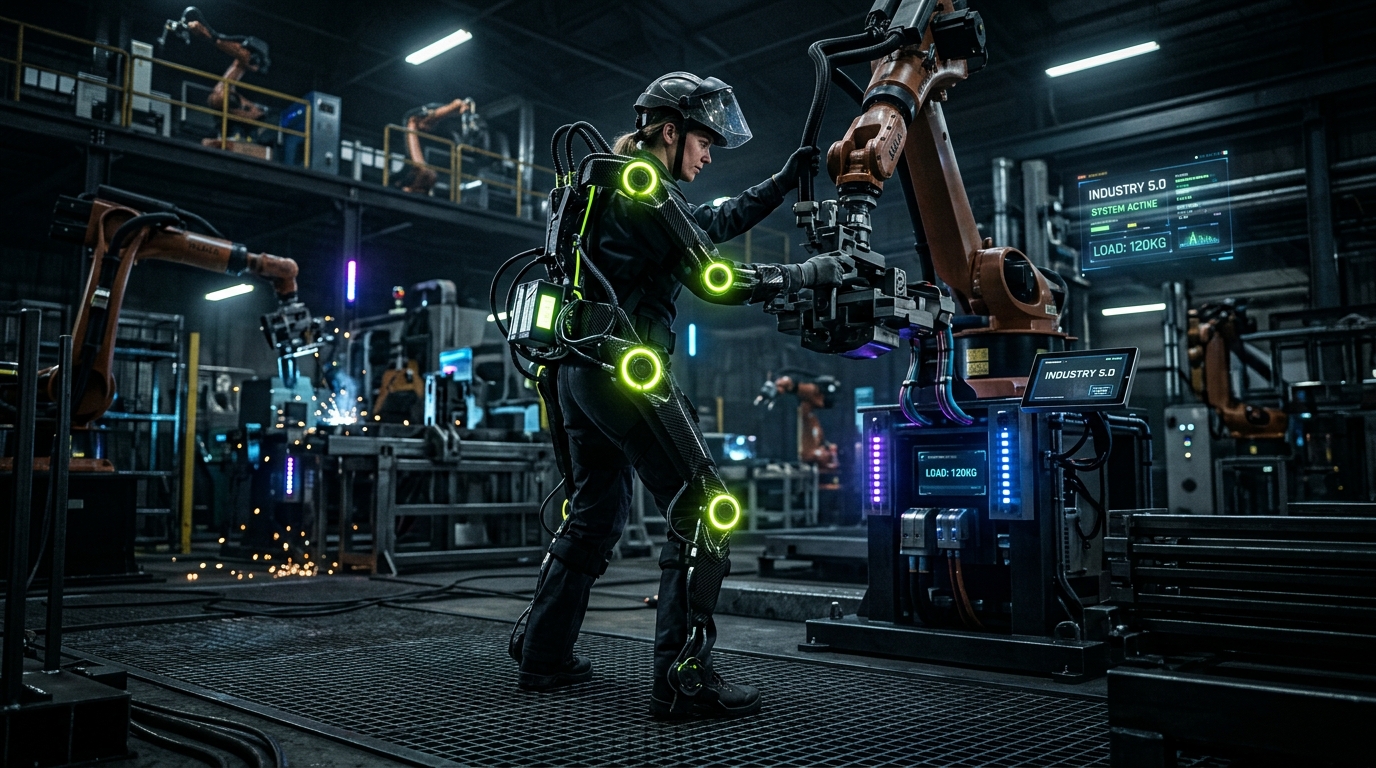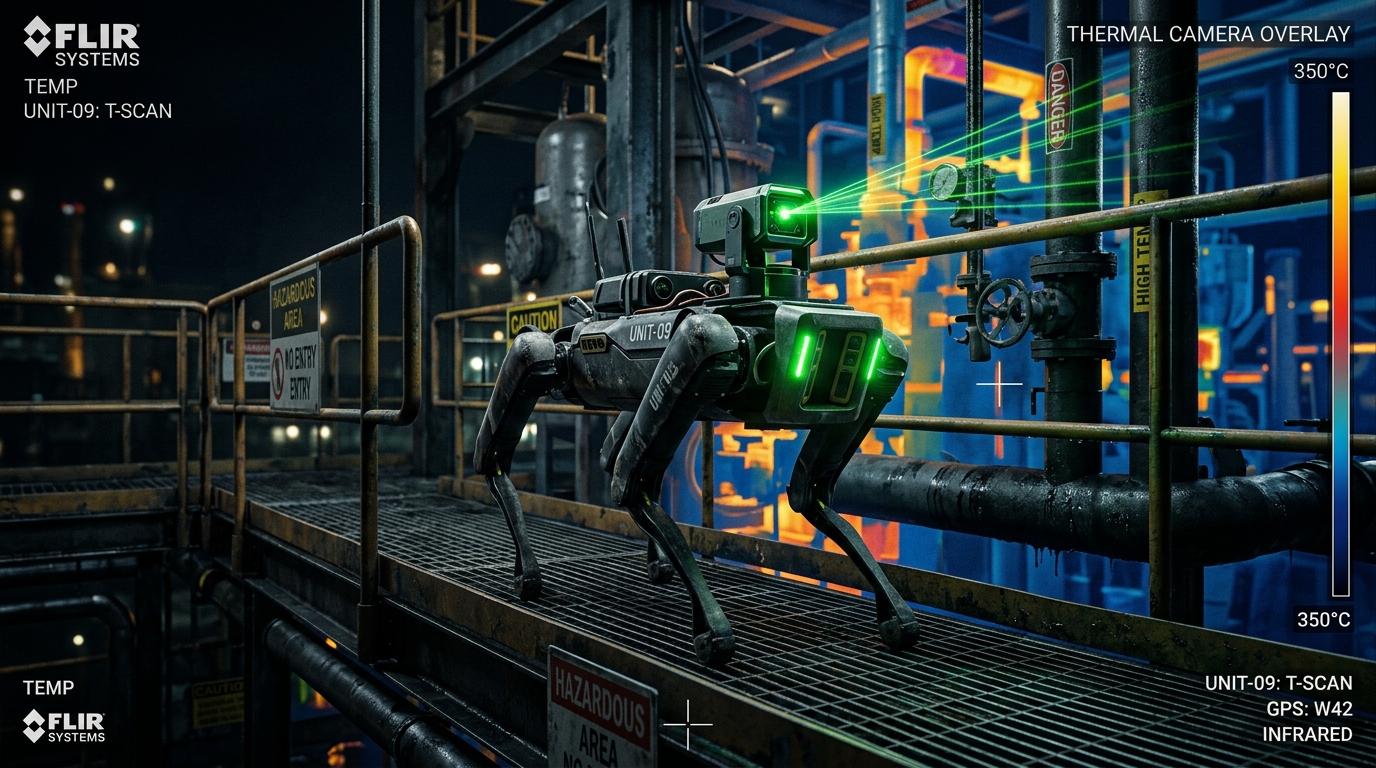
Global manufacturing faces dual pressures of historic proportions: extreme volatility across international energy markets alongside stringent European and global environmental mandates targeting production decarbonization (Net-Zero goals by 2050 and strict Scope 1 and Scope 2 emissions reporting). In energy-intensive sectors — such as steelmaking, primary chemicals, glass and cement manufacturing, food processing, and hyperscale Data Centers — energy expenditure accounts for up to 40–50% of total operating expenses (OpEx).
In this landscape, traditional Energy Management Systems (EMS) relying on ex-post statistical reporting prove inadequate. The true competitive breakthrough comes from combining Digital Twins with Predictive Artificial Intelligence — platforms capable of dynamically simulating, predicting, and optimizing every single watt consumed across an industrial plant in real time.
1. Technological Architecture of Energy Digital Twins
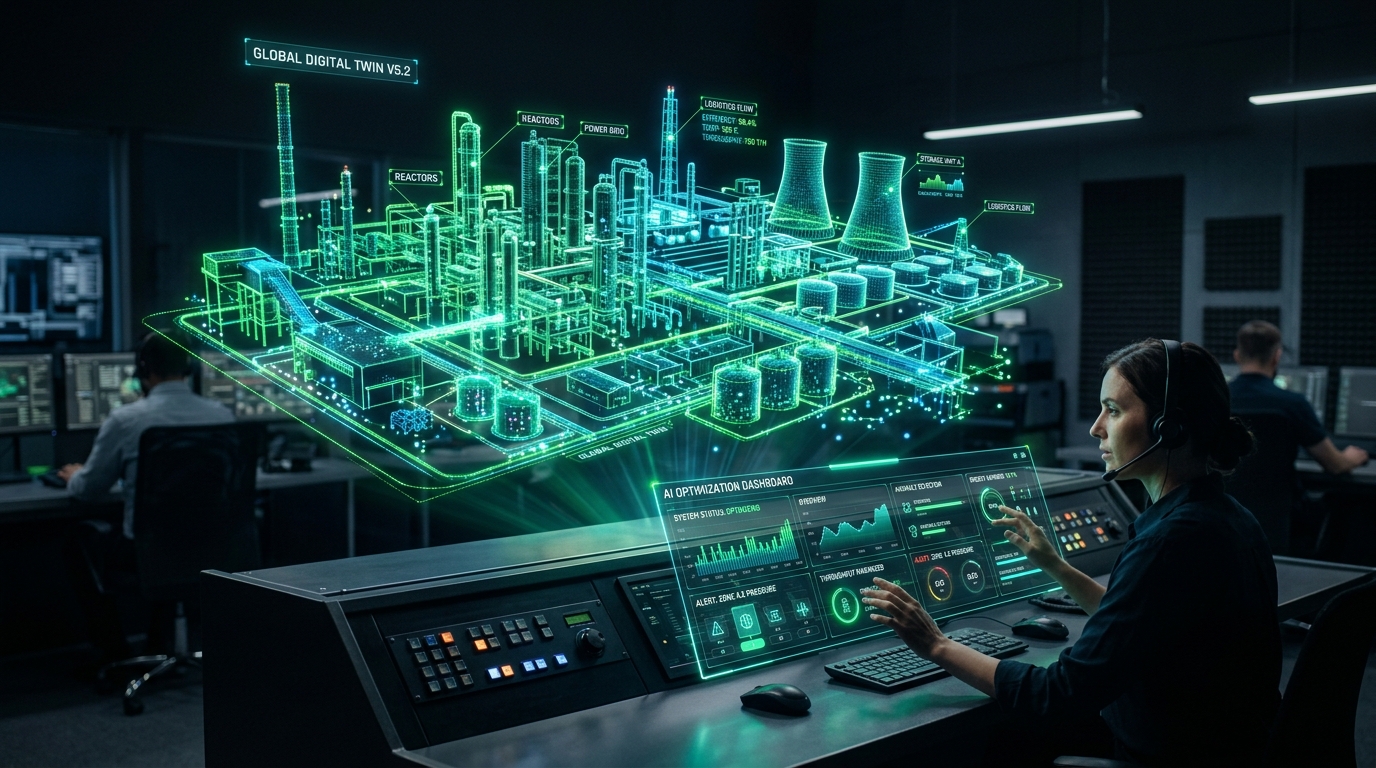
An energy Digital Twin is neither a static 3D CAD rendering nor a passive vector dashboard. It is a dynamic, mathematically complex digital replica of physical, thermodynamic, and electrical behavior across industrial assets, fed continuously by real-time telemetry streams from edge sensor networks.
┌─────────────────────────────────────────────────────────┐
│     IoT Sensors & Smart Meters (OPC-UA, Modbus, MQTT)    │
└───────────────────────────┬─────────────────────────────┘
                            │
                            ▼
┌─────────────────────────────────────────────────────────┐
│ Physics-Informed Neural Networks (PINN) + Edge Server   │
└───────────────────────────┬─────────────────────────────┘
                            │
              ┌─────────────┴─────────────┐
              ▼                           ▼
┌───────────────────────────┐ ┌───────────────────────────┐
│ Real-Time 3D "What-If"    │ │ Reinforcement Learning    │
│ Scenario Simulation       │ │ Valve/Inverter/Pump/      │
└───────────────────────────┘ │ Chiller Optimization      │
                              └───────────────────────────┘
Three Architectural Layers:
-
Edge Sensing and Data Ingestion: Thousands of smart meters, flow meters, pressure sensors, thermocouples, and power quality analyzers collect high-frequency metrics. Interoperability is achieved via secure industrial protocols (OPC-UA, MQTT, Modbus-TCP) integrated into IIoT (Industrial Internet of Things) architectures.
-
Hybrid Modeling (Physics-Informed Neural Networks - PINNs): The core breakthrough over purely statistical AI lies in embedding fundamental physical and thermodynamic laws (mass, energy, and momentum conservation equations) directly within Machine Learning algorithms. PINNs ensure AI predictions strictly honor unyielding physical machinery constraints, eliminating model hallucination risks.
-
Enterprise Integration (MES / ERP / SCADA): The digital twin engages in bidirectional data exchange with enterprise resource planning and production scheduling systems, aligning production targets with optimal energy efficiency curves.
2. Predictive AI Algorithms for Dynamic Optimization
With the digital plant replica initialized, AI engines operate across three core vectors:
A. Dynamic Control via Reinforcement Learning (RL)
In complex facilities with hundreds of interdependent variables (ambient temperature, humidity, component degradation, real-time power tariffs), human operators cannot calculate optimal configurations moment by moment. Deep Reinforcement Learning agents continuously learn by simulating millions of operating combinations on the Digital Twin, autonomously regulating pump and fan inverters, HVAC chiller setpoints, and furnace fuel valves without human intervention.
B. Intelligent Demand Response and Peak Shaving
Electrical power demand spikes (Peak Demand) trigger severe financial penalties in industrial grid supply contracts.
- Predictive AI analyzes weather feeds, production schedules, and spot market energy prices (Day-Ahead and Intraday Markets).
- Anticipating an upcoming peak, the Digital Twin executes Peak Shaving strategies: temporarily rescheduling non-critical high-energy steps or triggering onsite batteries (BESS - Battery Energy Storage Systems) or cogeneration units to smooth load profiles.
C. Energy-Focused Predictive Maintenance
Long before equipment suffers mechanical failure, parasitic energy loss serves as an early indicator of component degradation. The Digital Twin detects minute deviations between actual energy consumption and baseline theoretical models.
- Example: A sudden 4% surge in air compressor power consumption signals micro-leaks in distribution lines or heat exchanger fouling, enabling targeted maintenance before prolonged energy waste occurs.
3. Economic Impact and Return on Investment (ROI)
Deploying an enterprise Digital Twin and Predictive AI platform requires upfront investments in data infrastructure and software licenses, but delivers rapid payback cycles:
| Industrial Sector | Energy Consumption Reduction | CO₂ Reduction | Typical Payback Period |
|---|---|---|---|
| Chemical & Pharma | 14% – 22% | 15% – 20% | 10 – 14 months |
| Steel & Metallurgy | 10% – 18% | 12% – 16% | 8 – 12 months |
| Food & Beverage (Refrigeration) | 18% – 28% | 20% – 25% | 6 – 10 months |
| Data Centers & Hosting | 20% – 35% (PUE optimized) | 22% – 30% | 9 – 15 months |
Financial Case Study:
Consider a medium manufacturing facility consuming 50 GWh annually (an annual energy bill of approximately €7.5 million).
Annual Energy Expenditure: €7,500,000
               │
               ▼  [AI & Digital Twin Optimization: ~18% Savings]
               │
Direct OpEx Savings:  €1,350,000 / year
Emissions Avoided:    ~4,500 tons CO₂ / year
               │
               ▼
Software + IoT Implementation Cost: ~€900,000
REAL PAYBACK PERIOD: 8 MONTHS
4. Future Horizons: Generative AI and Decentralized Smart Grids
Over the next five years, energy digital twins will evolve into highly autonomous, self-governing systems:
-
Conversational Interfaces & Generative AI (“What-If” Natural Language Processing): Plant managers will query Digital Twins in plain language: “What is the impact on energy costs and carbon footprint if we shift the smelting shift from 2:00 PM to 10:00 PM?”, receiving instant predictive reports generated by multivariate simulation models.
-
Integration with Green Hydrogen & Onsite Microgrids: As enterprises install rooftop solar arrays, wind turbines, and onsite hydrogen electrolyzers, the Digital Twin acts as an autonomous Microgrid Controller — balancing local generation, self-consumption, chemical/battery storage, and grid support services (V2G / Grid Frequency Regulation).
5. Mantohn SA Investment Thesis
Mantohn SA identifies Digital Twin solutions for energy efficiency and decarbonization as one of the fastest-scaling software investment opportunities within the industrial transition ecosystem.
Our capital allocation framework prioritizes three verticals:
- Enterprise Industrial SaaS Platforms: Technology vendors operating independently of proprietary hardware, connecting agnostically to legacy SCADA and PLC systems via standardized software connectors.
- Deep-Tech Physics-Informed ML Developers: Scale-ups holding proprietary patents in physics-constrained machine learning models.
- Real-Time Carbon Accounting & MRV Platforms: Solutions linking energy reductions quantified by Digital Twins with verified carbon credit generation and corporate CSRD reporting.
Energy optimization is no longer just an environmental duty; it is a financial necessity. AI-powered Digital Twins represent the enabling technology guaranteeing industrial competitiveness and profitability in an era of mandatory sustainability.