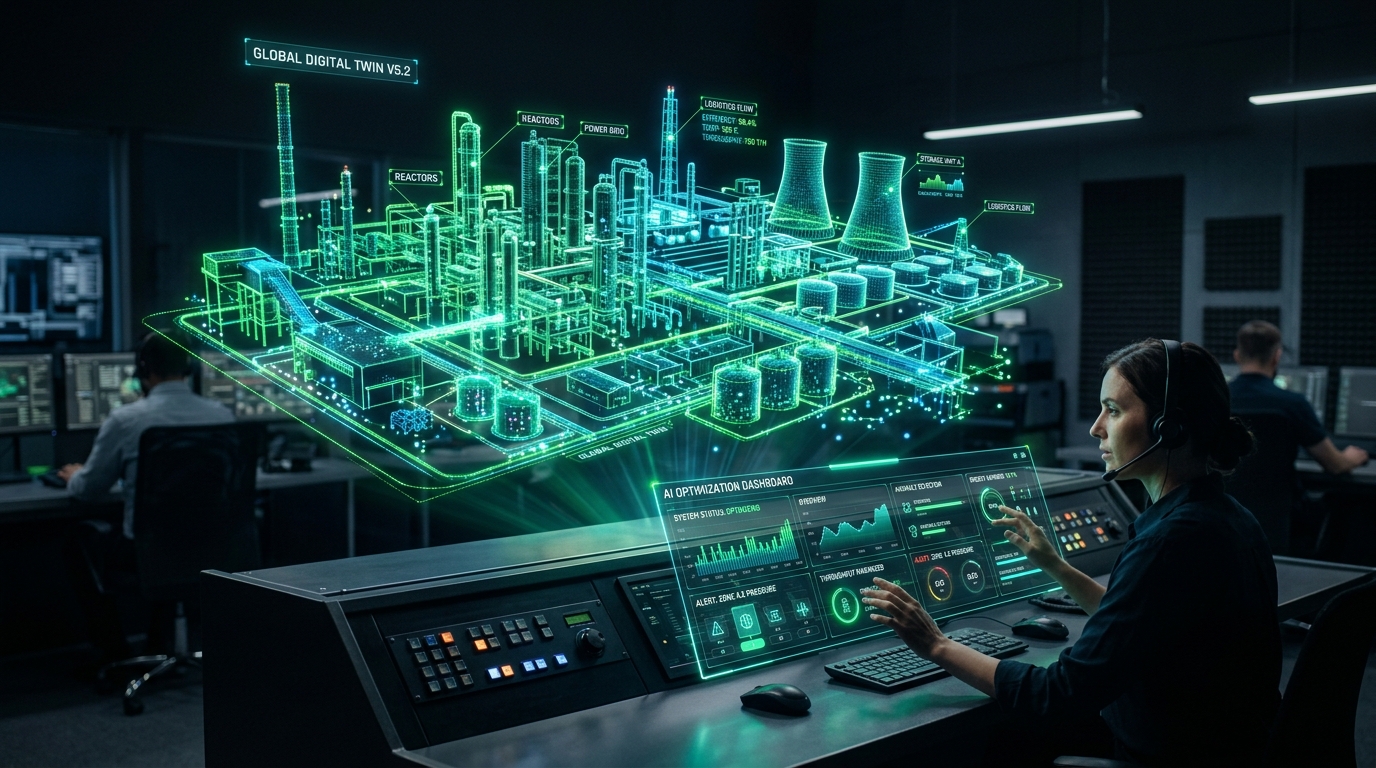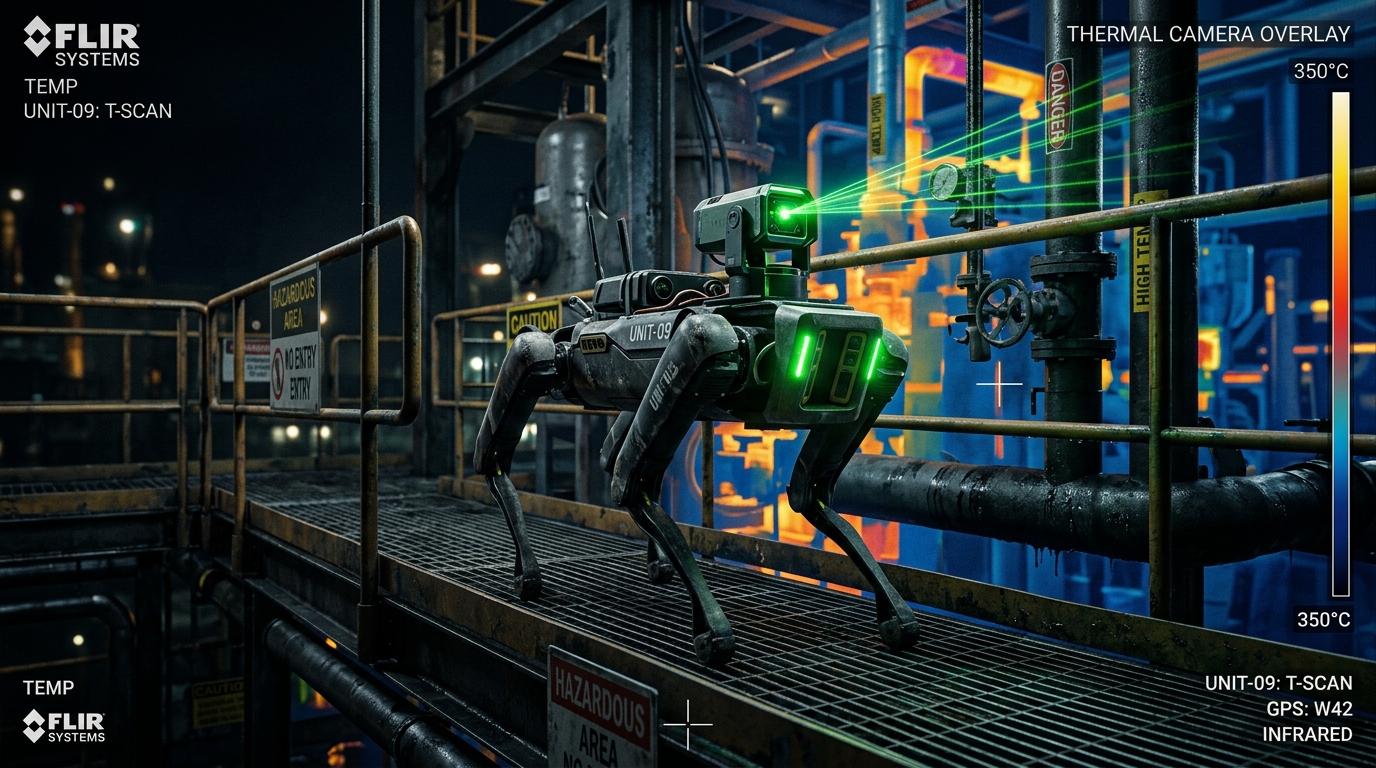
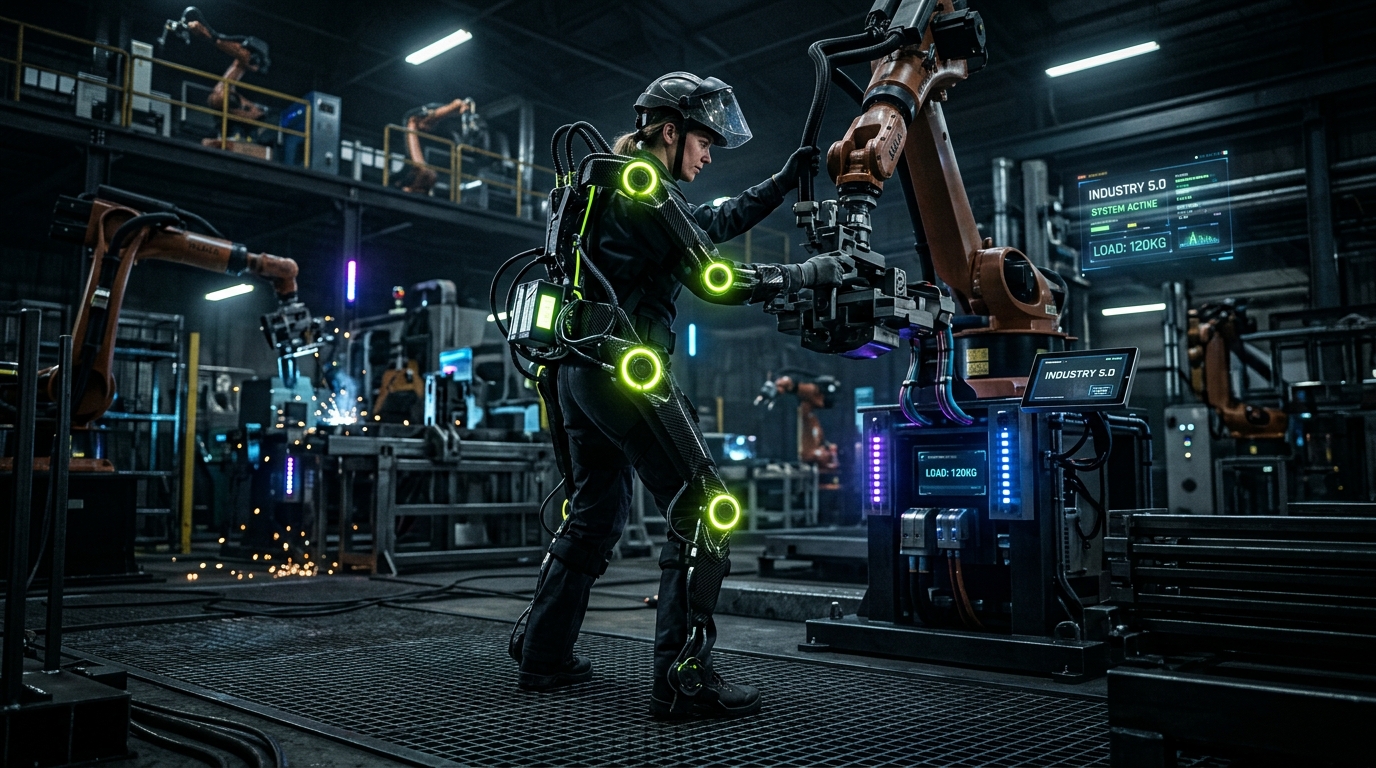
The evolution of industrial manufacturing is experiencing a fundamental paradigm shift: transitioning from Industry 4.0 — focused primarily on digitization, IoT interconnections, and aggressive automation — to Industry 5.0, which places human operators back at the center of the production line. In this human-centric paradigm, fully replacing human labor with autonomous robotic systems has proven unfeasible in highly complex operational domains such as automotive final assembly, aerospace maintenance, warehouse logistics, and naval shipbuilding. The cognitive flexibility, tactile dexterity, and problem-solving capacity of human operators remain irreplaceable.
However, repetitive biomechanical stresses from heavy load lifting, prolonged awkward postures, and overhead assembly work represent the primary cause of occupational disability worldwide. Musculoskeletal Disorders (MSDs) cost European industry over €240 billion annually in sick leave, workers’ compensation claims, and lost productivity.
In this landscape, industrial exoskeletons and wearable robotics emerge as the essential enabling technology for Operator 5.0. By augmenting human skeletal and muscular structures into an enhanced cybernetic platform, exoskeletons reduce biomechanical joint loads by up to 50%, extending working lives and preventing debilitating workplace injuries.
1. Technological Classification and Kinematics: Passive vs. Active Systems
Industrial wearable robotics falls into two main architectural families, distinguished by the energy source used to deliver assistive torque ($\tau_{assist}$).
                      [Industrial Exoskeletons]
                                  │
         ┌────────────────────────┴────────────────────────┐
         ▼                                                 ▼
[Passive Exoskeletons]                            [Active Exoskeletons]
  - Torsion springs & elastomers                    - Brushless DC electromechanical actuators
  - Zero batteries / infinite runtime               - Embedded IMU & EMG sensors
  - Lightweight (< 3.5 kg)                          - AI-driven adaptive torque assistance
  - Ideal for static support (shoulders/back)       - Dynamic multi-joint load assistance
1. Passive Exoskeletons
Passive systems utilize no electrical motors, microcontrollers, or batteries. Mechanical energy is stored and released via elastic energy storage elements, such as mechanical torsion springs, carbon-fiber flexure limbs, or synthetic elastomers.
- Operating Principle: During joint flexion (e.g., when an operator bends forward or lowers their arms), the spring stores potential elastic energy. During extension or static overhead holding, the spring releases stored energy, providing a counter-gravitational lift force.
- Advantages: Exceptionally low structural weight (1.5 kg to 3.5 kg), lower cost, zero electrical maintenance, and unlimited operational autonomy.
2. Active Exoskeletons (Mechatronic and Robotic)
Active exoskeletons incorporate electromechanical actuators (precision brushless DC motors coupled with Strain Wave / Harmonic Drive gearboxes), pneumatic actuators, or electroactive polymer artificial muscles.
- Operating Principle: Onboard microcontrollers process real-time sensor telemetry to calculate exact joint assistance torque required to seamlessly mirror operator motion.
- Advantages: High force delivery adaptable to variable dynamic loads, substantial reduction of muscular exertion during complex asymmetric maneuvers.
2. Biomechanical Engineering and Electromyography (EMG): Muscle Load Reduction
Scientific verification of exoskeleton performance relies on quantitative surface Electromyography (sEMG) measurements and biomechanical modeling of compressive spinal loads at the $L5/S1$ lumbar intervertebral disc.
Reduction of Spinal Compression ($L5/S1$)
When an unassisted worker lifts a 20 kg payload at a $45^\circ$ trunk flexion angle, the compressive load acting on the $L5/S1$ intervertebral disc frequently exceeds $4,000\text{ N}$, breaching safety thresholds set by NIOSH (National Institute for Occupational Safety and Health).
Integrating a passive or active lumbar exoskeleton applies an external supportive moment ($\tau_{exo}$) through thigh and pelvic reaction pads, counteracting trunk gravity moments:
$$\tau_{net} = \tau_{biom} - \tau_{exo}$$
Clinical and industrial field evaluations demonstrate:
- Erector Spinae sEMG Activity Reduction: 35% to 45% strain reduction during static bending and dynamic lifting.
- Anterior Deltoid and Trapezius Load Reduction: In upper-body overhead exoskeletons, electromyographic tension on shoulder musculature drops by 40% to 50%, virtually eliminating rotator cuff injury risks.
3. IoT Sensors, Edge AI, and Intent Prediction Algorithms
The cutting edge of active exoskeletons lies in combining precision mechatronics with Edge Artificial Intelligence algorithms.
[IMU & EMG Sensors] ──> [Edge AI Controller (LSTM/Neural Net)] ──> [Brushless Actuators] ──> [Adaptive Torque]Sensor Fusion and Predictive Control Architecture
- 9-Axis Inertial Measurement Units (IMUs): Placed across body segments (spine, upper arm, thigh) tracking angular velocities and spatial orientation at 1,000 Hz.
- sEMG or Myo-Tactile Pressure Sensors: Detecting muscle activation action potentials milliseconds before overt mechanical limb movement occurs.
- Recurrent Neural Networks (LSTM): Onboard AI models predict operator movement intent in under 10 milliseconds, dynamically adjusting motor torque. This eliminates human-machine latency or resistance feel (lag).
4. Techno-Economic Comparison: Industrial Exoskeleton Categories
| Parameter / Category | Passive Shoulder Exoskeleton | Passive Lumbar Exoskeleton | Active AI Lumbar Exoskeleton | Lower-Limb Support Exoskeleton |
|---|---|---|---|---|
| Target Body Joint | Shoulders & Arms (Overhead) | Lumbar Spine ($L5/S1$) | Lumbar Spine & Hips | Legs & Knees (Chairless) |
| Power Source | Mechanical Torsion Springs | Carbon Fiber Flexion Bars | Li-ion Battery + DC Motors | Mechatronic Lock Mechanism |
| Structure Weight | 1.9 kg – 2.8 kg | 2.2 kg – 3.5 kg | 4.5 kg – 6.8 kg | 3.0 kg – 4.2 kg |
| Peak Assist Force | 5 kg – 8 kg per arm | 15 kg – 25 kg force boost | 30 kg – 40 kg dynamic lift | 100% bodyweight seat support |
| Primary Industry | Automotive Underbody Assembly | Logistics & Material Handling | Heavy Machinery & Construction | Static crouching assembly |
| Operational Runtime | Unlimited | Unlimited | 4 – 8 Hours (Swappable) | Unlimited / Battery |
| Average CAPEX | €2,500 – €4,500 | €3,000 – €5,000 | €8,000 – €18,000 | €4,000 – €7,500 |
5. Investment Outlook and Mantohn SA Strategy
From an investment and venture capital standpoint, industrial wearable robotics is entering an aggressive adoption S-curve, with global market forecasts projecting a CAGR exceeding 26% between 2026 and 2032.
Key return on investment (ROI) drivers for manufacturing enterprises and investors include:
- Direct Injury Cost Avoidance: The payback period for deploying exoskeleton fleets in automotive plants is estimated at just 12 to 18 months, driven by reduced absenteeism and lower workers’ compensation insurance premiums.
- ESG Social Impact and Workforce Retention: Exoskeletons directly elevate ESG Social (S) scores by protecting aging industrial workforces against chronic physical wear.
- Exoskeleton-as-a-Service (EaaS) Business Models: Transitioning from one-time hardware sales to recurring subscription contracts (including hardware, maintenance, ergonomic telemetry analytics, and AI updates) provides high-margin software-like revenues.
Mantohn SA actively targets and funds wearable robotics ventures pioneering ultra-lightweight active exoskeletons and AI motion control software.