The Waste-to-Energy (WtE) sector is undergoing a profound conceptual and engineering transformation. For decades, traditional incineration with heat recovery represented the standard for managing Municipal Solid Waste (MSW) and unrecyclable industrial waste. However, stringent European decarbonization mandates, the EU ETS carbon pricing mechanism, and rising demand for decarbonized molecules are driving the industry toward Third-Generation Waste-to-Energy: advanced thermochemical conversion processes such as gasification and pyrolysis.
This article analyzes the engineering differences, emission profiles, and financial return models distinguishing first- and second-generation direct combustion from third-generation chemical synthesis platforms.
1. Evolution of Waste-to-Energy Systems
Traditional incineration and advanced thermochemical conversion differ fundamentally in their thermodynamic operating principles:
- First & Second Generation (Grate Incineration / Rotary Kiln): Complete combustion reaction with excess stoichiometric oxygen ($\lambda > 1$). Waste is fully oxidized to yield hot flue gases ($CO_2, H_2O, N_2$) routed to a recovery boiler generating high-pressure steam to drive a steam turbine.
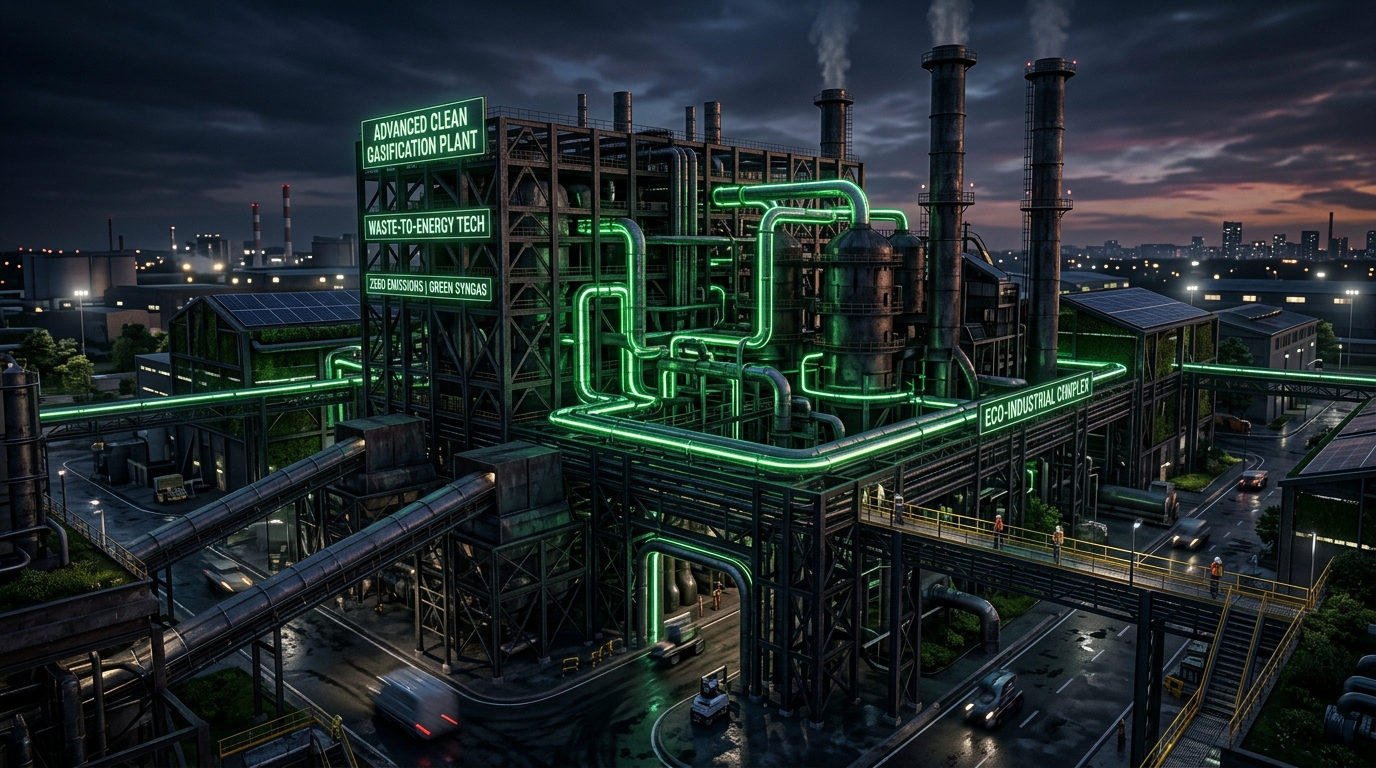
- Third Generation (Advanced Gasification & Pyrolysis): Thermochemical conversion in oxygen-deprived or oxygen-deficient atmospheres ($\lambda < 1$ or $\lambda = 0$). Rather than burning waste, organic matrices undergo thermal decomposition to break complex hydrocarbon chains, generating a purifiable synthesis gas (Syngas composed primarily of $CO$ and $H_2$).
[Organic Waste / Refuse-Derived Fuel (RDF)]
          │
          ├───────────────────────────────────────────────────┐
          │                                                   │
          ▼ (Direct Combustion: λ > 1)                        ▼ (Gasification / Pyrolysis: λ < 1)
 [Grate Furnace 850–1000°C]                          [Gasifier / Reactor 800–1400°C]
          │                                                   │
          ▼                                                   ▼
 [Hot Flue Gas + Massive CO₂]                         [Raw Syngas (CO + H₂)]
          │                                                   │
          ▼                                                   ▼
 [Boiler ➔ Steam Turbine]                             [Gas Cleaning ➔ Fischer-Tropsch / WGS]
          │                                                   │
          ▼                                                   ▼
 [Electricity (Efficiency ~22–25%)]                  [Hydrogen / SAF / Methanol / e-Chemicals]
2. Process Mechanics: Incineration vs. Gasification & Pyrolysis
To fully appreciate the technological superiority of Third-Generation systems, we examine the three main thermochemical processes.
Traditional Incineration (Combustion)
- Conditions: Temperatures between $850^\circ C$ and $1050^\circ C$ with abundant primary and secondary air.
- Primary Outputs: Thermal steam, bottom ash, and hazardous fly ash.
- Limitations: Net electrical efficiency of steam waste-to-energy plants remains low (between 20% and 26%). Furthermore, flue gas volumes requiring treatment are massive, demanding extensive flue gas cleaning systems for dioxins, furans, $NO_x$, and acid gases ($HCl, SO_x$).
Gasification
- Conditions: Elevated temperatures ($800^\circ C - 1300^\circ C$) under controlled oxidant flow (pure oxygen, steam, or sub-stoichiometric air).
- Plasma Gasification: Utilizes electric arc plasma torches generating core temperatures exceeding $3000^\circ C - 5000^\circ C$. Under these extreme conditions, any waste matrix (including toxic and medical waste) instantly dissociates into elementary atoms, vitrifying inorganic fractions into inert non-leachable slag (vitrified slag) while yielding high-energy syngas.
Pyrolysis
- Conditions: Thermal breakdown in the complete absence of oxygen at medium to high temperatures ($400^\circ C - 800^\circ C$).
- Outputs: Yields three valorizable streams based on temperature and residence time regimes:
- Gaseous Phase: Non-condensable high-calorific gases.
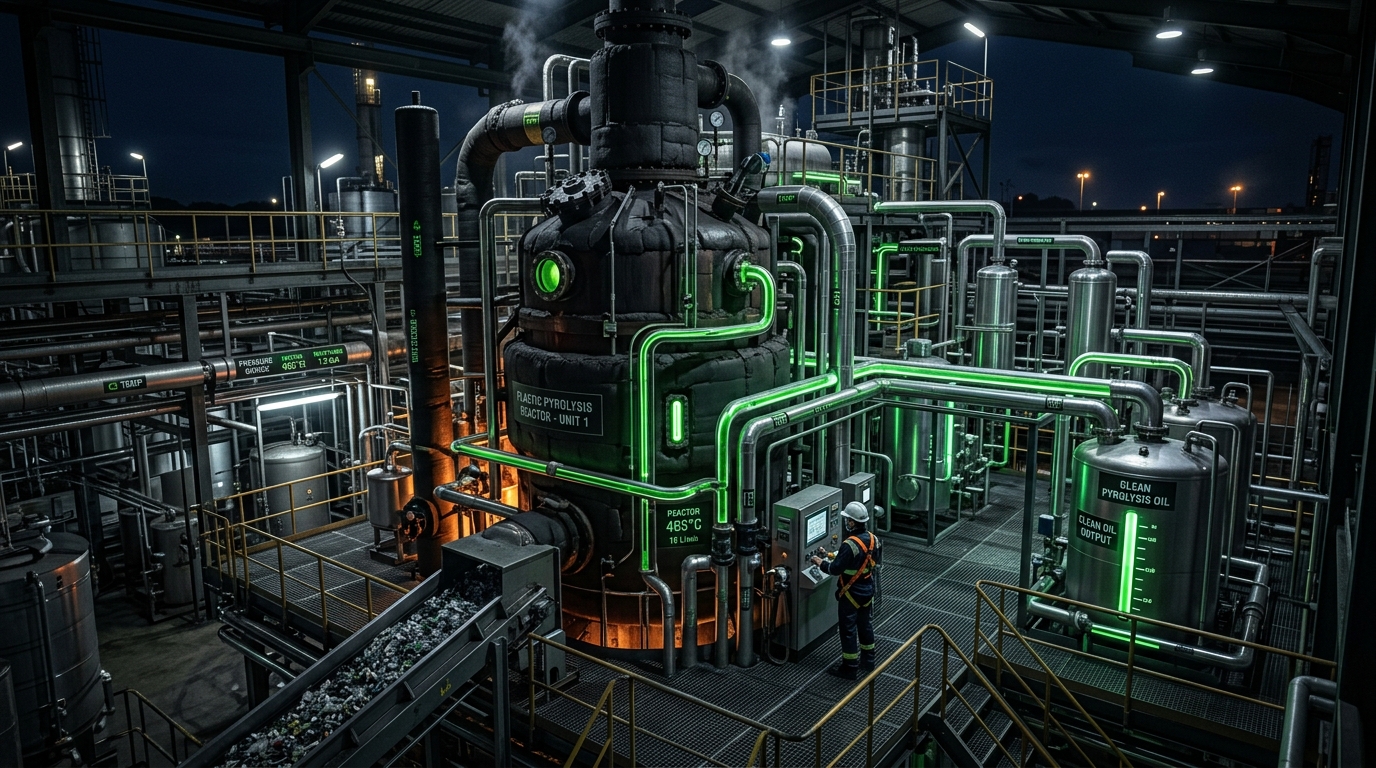
- Liquid Phase (Bio-oil/Tars): Liquid hydrocarbon mixtures refineable into biofuels.
- Solid Phase (Biochar / Carbon Black): Stable solid carbon usable as soil amendment, metallurgical reducing agent, or permanent carbon sink.
3. Technical & Environmental Comparison Matrix
The table below contrasts traditional combustion with advanced third-generation gasification systems:
| Analytic Parameter | Traditional Grate Incineration | Advanced Gasification / Pyrolysis |
|---|---|---|
| Chemical Agent | Atmospheric air in high excess ($\lambda > 1.3$) | Pure Oxygen / Steam / None ($\lambda \le 0.4$) |
| Primary Energy Product | Low/medium enthalpy heat / Electricity | Syngas ($CO + H_2$) with high chemical versatility |
| Net Electrical Efficiency | 20% – 25% | Up to 35% – 40% (IGCC combined cycles) |
| Exhaust Flue Volume | High (100%) | Low (up to 70% reduction vs combustion) |
| Dioxin / Furan Generation | Possible (requires de-novo synthesis quench) | Negligible or absent (reducing environment) |
| Residual Solid Fraction | Toxic fly ash and heavy bottom ash | Non-leachable vitrified slag / Biochar |
| Destination Flexibility | Power / District Heating only | Green Hydrogen, SAF, Methanol, e-Fuels |
| Carbon Capture (CCS/CCU) | Complex & expensive (dilute CO₂ in flue gas) | Streamlined (concentrated high-pressure CO₂) |
4. Syngas Chemistry: Gateway to Future Fuels
The financial paradigm shift of Third Generation WtE lies in Syngas Versatility. While incineration yields only electrons or low-temperature heat, gasification functions as a chemical synthesis refinery.
                  ┌─► Water-Gas Shift (WGS) ───────────► Pure Hydrogen (H₂) [Fuel Cell / Industry]
                  │
[Syngas: CO + H₂] ┼─► Fischer-Tropsch Synthesis ──────► SAF (Sustainable Aviation Fuel) / Diesel
                  │
└─► Catalytic Methanol Synthesis ───► Green Methanol [Shipping Fuel / Plastics]- Waste-to-Hydrogen: Via the Water-Gas Shift reaction ($CO + H_2O \rightarrow CO_2 + H_2$) followed by PSA (Pressure Swing Adsorption) purification, syngas converts to high-purity hydrogen, essential for heavy mobility and green steelmaking.
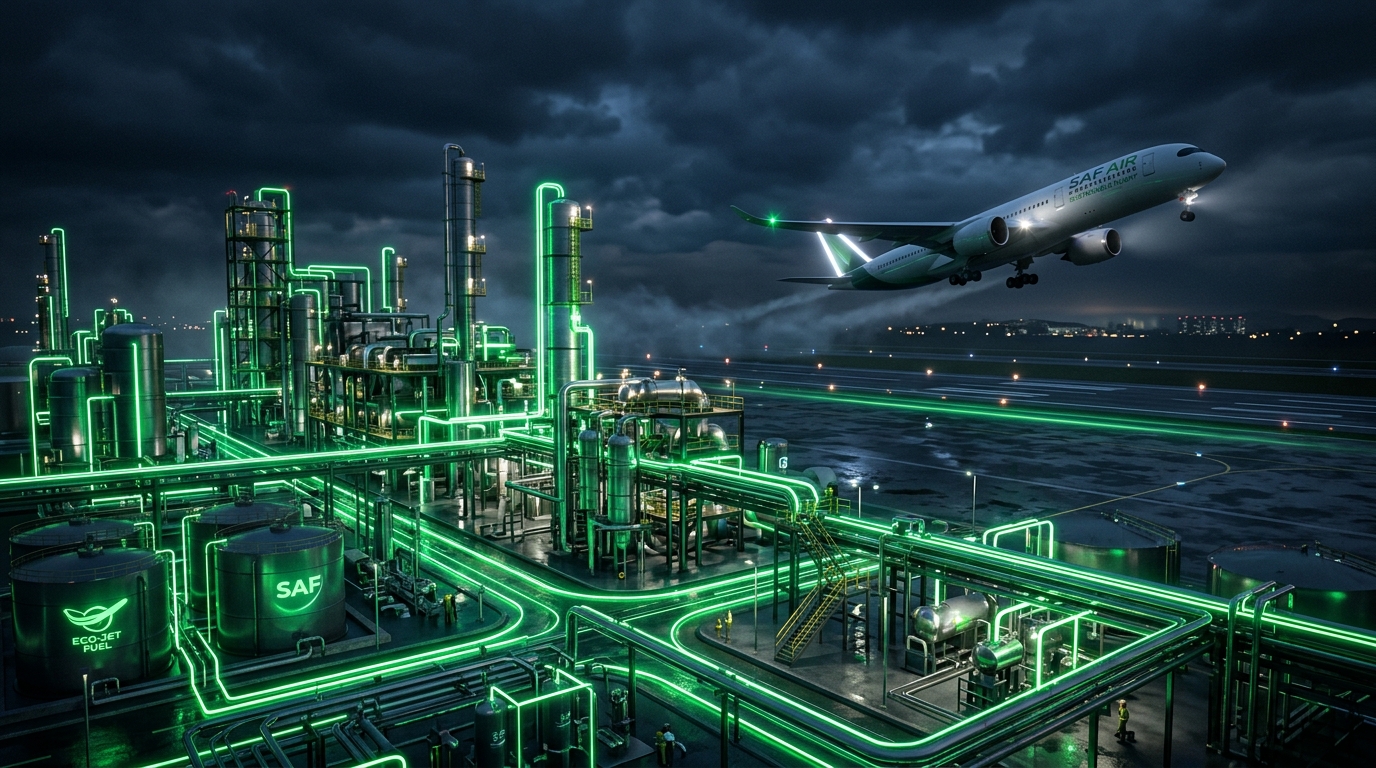
- Sustainable Aviation Fuel (SAF): Utilizing Fischer-Tropsch synthesis, syngas recombines into long-chain hydrocarbons to produce synthetic jet kerosene, reducing aviation sector emissions by up to 80%.
- Methanol and e-Chemicals: Purified syngas serves as building block feedstocks for circular methanol production, key for chemical industries and next-generation marine propulsion.
5. Financial Profiles, EU Taxonomy, and EU ETS
Transitioning from incineration to gasification dramatically enhances WtE plant financial bankability for sustainable finance and investment banking.
EU ETS Penalties and EU Taxonomy
Legacy incinerators face increasing regulatory headwinds: the phased inclusion of municipal waste incinerators under the EU ETS carbon market imposes rising costs for every metric ton of fossil $CO_2$ emitted. Conversely, gasification facilities equipped with carbon capture and utilization (CCU) modules enjoy tax incentives, carbon credits, and full alignment with EU Taxonomy criteria (Do No Significant Harm - DNSH).
Investor Return Profile & CapEx/OpEx
Although initial CapEx for third-generation gasification facilities is approximately 25% to 40% higher than traditional incinerators of equivalent scale, net OpEx is heavily offset by:
- Higher Output Value: Market prices per kilogram of green hydrogen or SAF far exceed equivalent kilowatt-hour power tariffs.
- Lower Ash Disposal Expenses: Vitrified inert slag output reduces hazardous landfill disposal costs by 90%.
- Resilience to Energy Price Volatility: Ability to shift output streams (e.g., between electricity, hydrogen, or synthetic fuels) based on real-time spot market pricing.
6. Mantohn SA Strategic Outlook
Mantohn SA views third-generation thermochemical conversion as the core pillar of next-decade circular infrastructure. Combining strategic capital with engineering expertise, Mantohn supports deploying Regional Resource Hubs replacing legacy grate incinerators with flexible, zero-direct-emission gasification modules.
Investing in Third-Generation WtE frees regions from landfill reliance, drives European energy independence, and transforms waste management from a municipal cost center into a factory for high-value molecules.